


Introduction: The Mongolian Empire's Military Prowess
The Mongolian Empire, renowned for its vast conquests, owes much of its success to its innovative military strategies and advanced weaponry. Under the leadership of Genghis Khan and his successors, the Mongols revolutionized medieval warfare across Asia and Europe. This article explores the evolution of Mongolian weapons, their impact on battle tactics, and the types of armor that protected their formidable warriors.
The Evolution of Mongolian Weapons and Tactics
Impact of Mongolian Weaponry on Battle Tactics
The Mongols were exceptional military strategists, leveraging speed, surprise, and advanced weaponry to gain the upper hand in battles. Their arsenal included a range of innovative weapons that transformed their approach to warfare:
The Composite Bow
.jpg)
One of the most iconic weapons in the Mongolian arsenal was the composite bow. Unlike simple wooden bows or longbows from other cultures, the Mongolian composite bow was made from layers of wood, horn, and sinew. Its advantages included:
- Long Range: Capable of shooting arrows over great distances, giving Mongol archers a significant advantage in long-range combat.
- High Rate of Fire: Its compact size allowed mounted archers to shoot while riding at high speeds, perfect for hit-and-run tactics.
- Power of Penetration: The bow's design enabled arrows to pierce armor, enhancing the Mongols' effectiveness against heavily armored opponents.
The Mangonel (Mongolian Catapult)
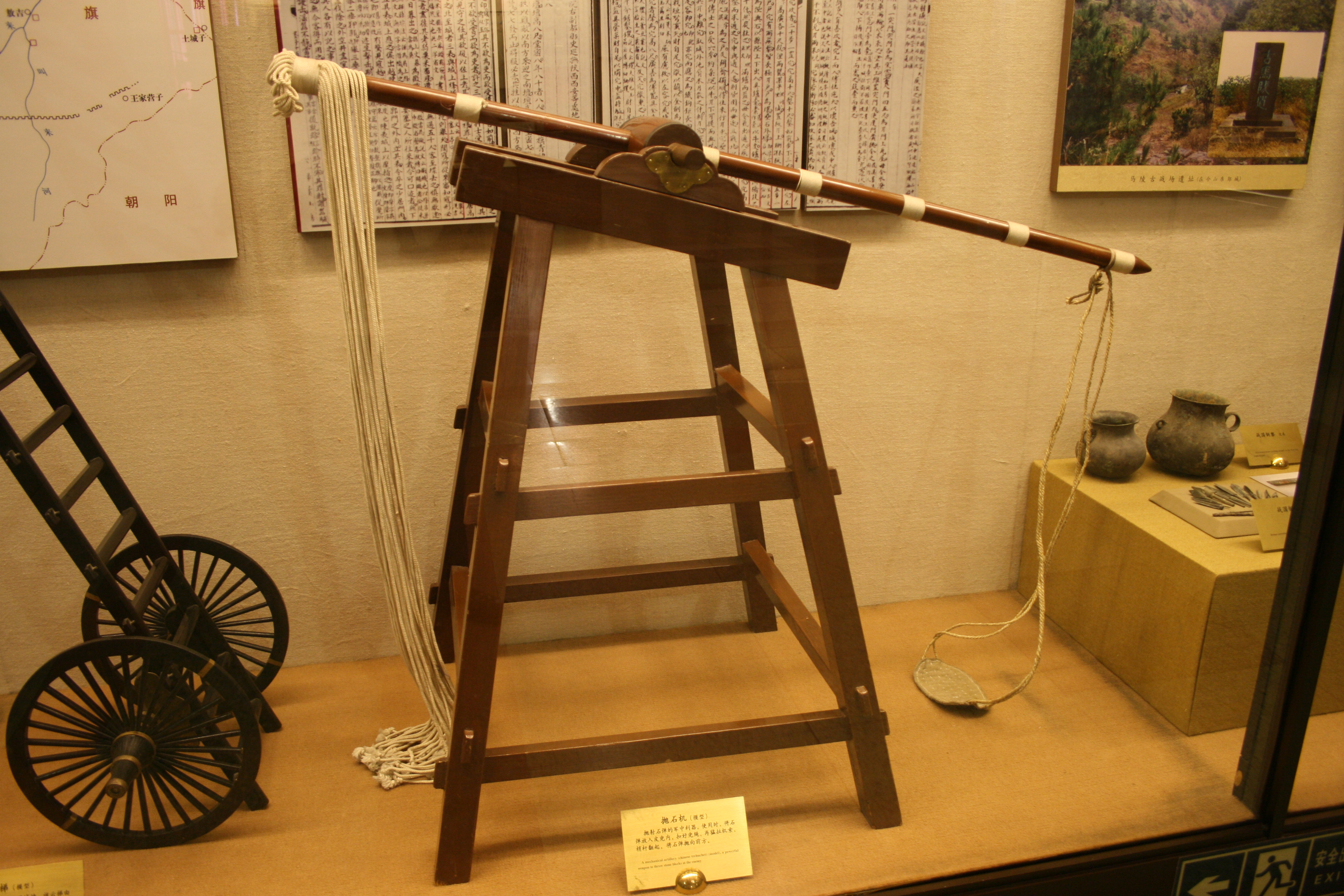
The mangonel was a powerful siege weapon used by the Mongols. This catapult could hurl large objects over long distances, making it crucial for destroying fortifications and city walls during sieges.
The Saber (Shamshir)

The Mongolian saber, or shamshir, was a curved sword designed for slashing rather than thrusting. Its curvature allowed for powerful sweeping strikes, especially effective from horseback, complementing the Mongols' hit-and-run tactics.
Mongolian Battle Tactics
Mongolian battle tactics were closely aligned with their weaponry:
Hit-and-Run Tactics
Mongolian archers employed hit-and-run tactics, using their superior range and mobility to harass enemy forces. They would shoot arrows while riding at full speed and then withdraw before the enemy could mount an effective counterattack. This "Parthian shot" strategy wore down opponents and disrupted their formations.
Psychological Warfare
The Mongols mastered psychological warfare, using their mobility and surprise attacks to instill terror in their enemies. By simulating retreats or employing other forms of subterfuge, they tricked opponents into making strategic mistakes, gaining advantages in battle.
Coordination and Communication
Effective coordination and communication were key to Mongolian military success. Troops used signaling and messengers to respond quickly to changes on the battlefield, enabling complex maneuvers and the successful execution of hit-and-run tactics.
Types of Armor Worn by Mongolian Warriors
Mongolian armor was designed to provide protection while allowing for mobility:
Leather and Fur Armor
The most common armor consisted of layered leather and fur. This lightweight and flexible armor offered good protection against arrows and melee weapons while allowing for unhindered movement.
Lamellar Armor
Lamellar armor, made of small overlaid plates often reinforced with metal, provided better protection than simple leather armor. It was effective against both arrows and slashing attacks and did not impede mobility.
Iron Helmets
Mongolian warriors wore iron helmets, usually conical in shape, to protect their heads from arrows and blows. These helmets were lightweight, allowing for agility during combat.
Armored Saddles
Mongolian horses also wore armored saddles and horse armor to protect them from arrows and melee cuts. This protection was crucial for maintaining the effectiveness of Mongolian cavalry charges.
Shields
Mongolian warriors used lightweight yet durable shields made from wood and leather. These shields provided good protection from arrows and close combat assaults.
.jpg) |
Mongolian Empire Mongol Mounted Warrior |
FAQs
What made Mongolian warfare so effective?
Mongolian warfare was highly effective due to its mobility, innovative tactics, and organized chain of command. The Mongols excelled in mounted archery, psychological warfare, and adaptability, often outmaneuvering larger and better-equipped armies. Their extensive network of scouts enabled rapid intelligence gathering and strategic planning.
What were the key tactics used by Mongols in battle?
The Mongols employed several key tactics, including feigned retreats to lure enemies into ambushes and hit-and-run tactics with mounted archers. They also used psychological warfare to instill fear and manipulate their opponents. Their tactics often involved weakening enemy lines with arrows before charging with cavalry.
How did the Mongols conduct sieges?
During sieges, the Mongols used advanced siege technologies like catapults to bombard cities with stones, blazing arrows, and even diseased corpses. Their engineers were skilled in overcoming fortifications, and they often used human shields to protect their forces.
What role did horses play in Mongolian warfare?
Horses were central to Mongolian warfare. The Mongol cavalry was known for its speed and stamina, allowing them to execute rapid maneuvers and surprise attacks. The mobility of Mongol horse archers enabled them to travel long distances and maintain effective supply lines.
What psychological tactics did the Mongols use?
The Mongols used psychological tactics to terrorize and subdue their enemies. This included mass slaughter of civilians to prevent future rebellions and the threat of destruction to deter resistance. Their reputation for brutality often led to cities surrendering without a fight.
Did the Mongols rely only on cavalry?
While cavalry was their primary force, the Mongols also used infantry and siege machinery, particularly in heavily fortified cities. Their ability to adapt to different types of warfare, from mobile raids to organized sieges, contributed to their military success.


 Posts
Posts


.jpg)

0 Comments